


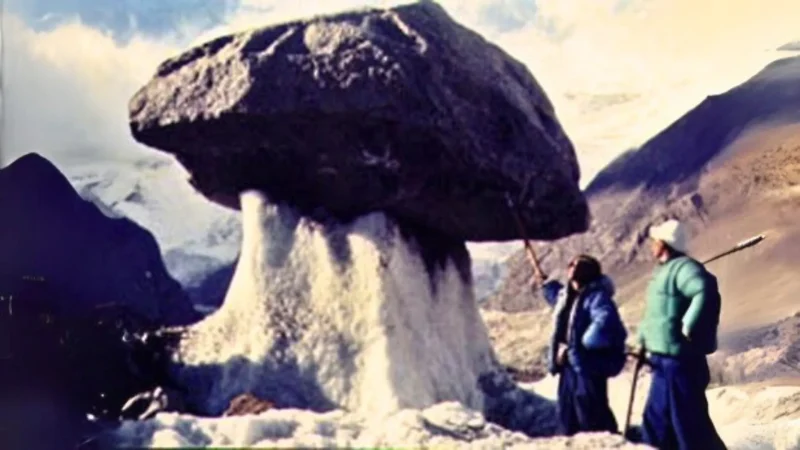
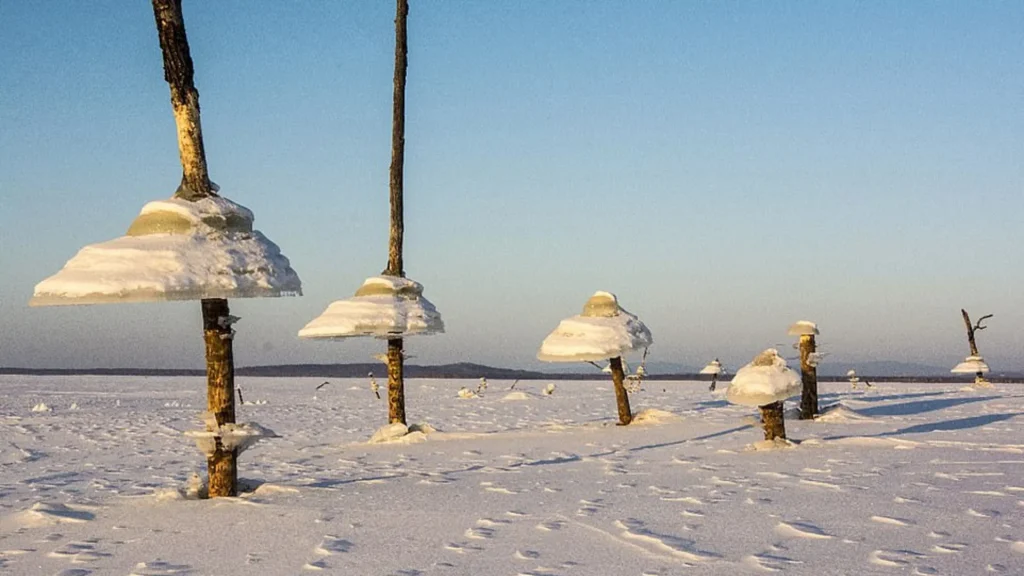
A toadstool is a fungus with a rounded cap and stalk. But in far eastern Russia, giant ice toadstools are “growing.” Thanks to a combination of human handiwork and nature’s forces, these toadstools are drawing attention and wonder. So, how do they form? Let’s dive in and look closer at this weird phenomenon!
Where Are the Giant Ice Toadstools?
Also called “magic mushrooms,” the giant ice toadstools are in the Siberian wilderness. The Amur region of Russia is in the far eastern part of the country. Blagoveshchensk, one of the closest communities, is 125 miles away. The town is near the Chinese border in southeast Russia. However, that doesn’t keep visitors from trekking to the Niznhe-Bureyskaya hydropower station to view this strange phenomenon.
HOT TIP
If you’re a fan of nature and want to travel with the planet in mind, check out these 5 Climate-Friendly Travel Companies!
What Causes the Giant Ice Toadstools?
The colossal Niznhe-Bureyskaya hydropower station began operating in 2017. This is when the first giant ice toadstools appeared. The artificial lake is 2,455 feet long and has a 156-foot dam.
The snow-capped mushrooms of ice form because of the changing water levels of the reservoir. When the water level decreases, ice forms on the trees. As the Siberian winds blow across the reservoir, these unique giant ice toadstools take their fungus-like shape.
Therefore, this weird phenomenon is half artificial and half natural. Human hands created the reservoir, while the natural winds of Siberia do the rest.
When Did Scientists First Discover the Giant Ice Toadstools?
The giant ice toadstools in the Siberian wilderness didn’t appear until the Niznhe-Bureyskaya hydropower station began operating in 2017. When a hydroelectric plant discharges water, the water level of the reservoir lowers. As a result of this change, scientists and researchers can note where the water level has been by observing the difference between the giant ice toadstools and the icy lake surface.
Where Are Geologic Toadstools In the U.S.?
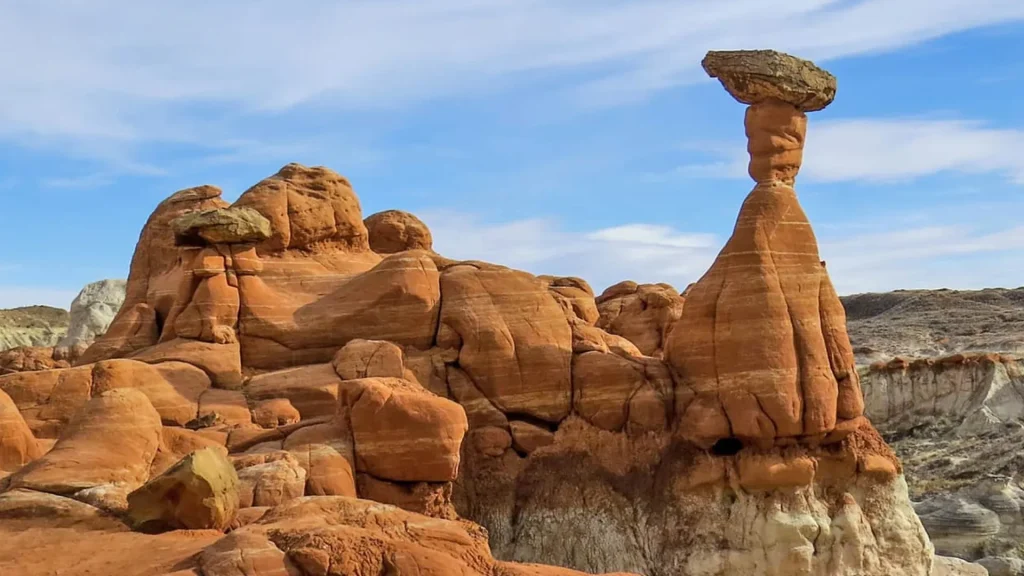
Although the giant ice toadstools of Siberia are strange, toadstools aren’t uncommon. In the U.S., visitors hike through Toadstool Geologic Park in the Oglala National Grassland of Nebraska. A one-mile loop provides excellent opportunities to view the mushroom-like rock formations.
Grand Staircase-Escalante National Monument in Utah is another place in the U.S. where you can view geologic toadstools. A 1.5-mile trail meanders through the national monument, taking outdoor adventurers through an extra-terrestrial experience.
As you visit the Utah national parks at Zion, Bryce Canyon, Capitol Reef, Arches, and Canyonlands, you’ll see some of the most incredible rock formations in the country. From hoodoos to toadstools to spires to arches, it’s a geologic wonderland!
Other Unique Natural Phenomena Around the World
The giant ice toadstools of Siberia are a weird phenomenon. There are other unique formations around the world. From flowers that seem to bloom on a frozen lake to glow-in-the-dark mushrooms to a waterfall that runs blood red, here are three natural phenomena that we found most interesting.
Hokkaido’s Frost Flowers
On Japan’s northernmost island of Hokkaido, you’ll find Lake Akan in Akan-Mashu National Park. When temperatures dip below freezing in winter, flowers appear to bloom. These ice flowers crystallize on the lake’s surface when there’s a thin layer of ice and no wind. It’s a beautiful meadow of frostflowers on Lake Akan.
Brazil’s Bioluminescent Mushrooms
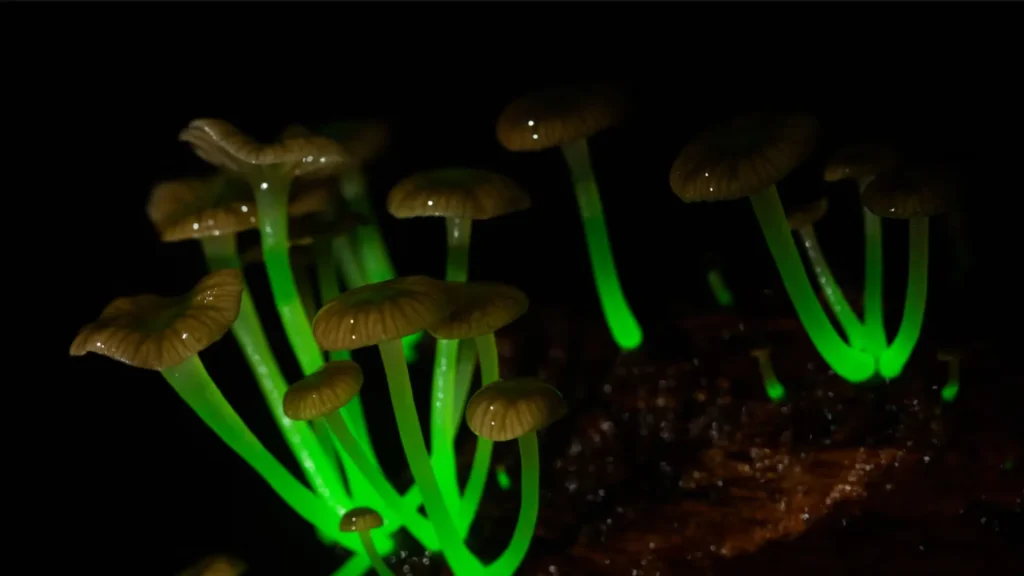
Brazil’s Atlantic Forest contains about 20 species of bioluminescent fungi. These glow-in-the-dark mushrooms form on tree bark because of the humidity. A chemical reaction between the decaying wood and the fungi creates its bioluminescence. Visitors can book a guided night tour to view this unique natural phenomenon.
Blue Volcanoes
While the lava of every volcano is red or orange, when a volcano contains large amounts of pure sulfur, it emits an icy color as it burns. Sometimes this appears as blue, while other times it’s a violet color. Toxic fumes fill the air, which makes these volcanic eruptions extremely dangerous. Ethiopia’s Danakil Depression and Indonesia’s Kawah Ijen are two of the most famous blue volcanoes in the world.
Antarctica’s Blood Falls
At the end of Taylor Glacier in east Antarctica flows Blood Falls. Oozing five stories, the saltwater is rich in iron. When the water from the underground reservoir reaches the surface, the iron reacts with oxygen, creating a red hue. Against the white surface of the glacier, Blood Falls is an awe-inspiring sight.
The Smokies’ Synchronized Fireflies
Closer to home in Great Smoky Mountains National Park, visitors flock to the Tennessee-North Carolina border every spring to view the synchronized fireflies. This occurs during mating season for about two or three weeks. Since some fireflies are predatory, these males flash in unison so females know they are responding to their kind.
Nature Is Constantly At Work Revealing Uncommon Formations
Isn’t nature amazing? The beauty of unique landscapes and seemingly impossible sights due to chemical reactions elicit wonder and awe. The giant ice toadstools in the Siberian wilderness are only one of the strange phenomena that regularly occur on our planet. Although you might not venture too far east in Russia to see them in person, you can easily access the geologic toadstools of the U.S.
Which natural phenomenon do you find the most interesting?
If You Want the Latest Travel News, Join Our Mailing List
Don’t rely on biased RV industry news sources to keep you informed. Stick with Nomadic News. We publish articles and breaking stories that matter to you every weekday.