


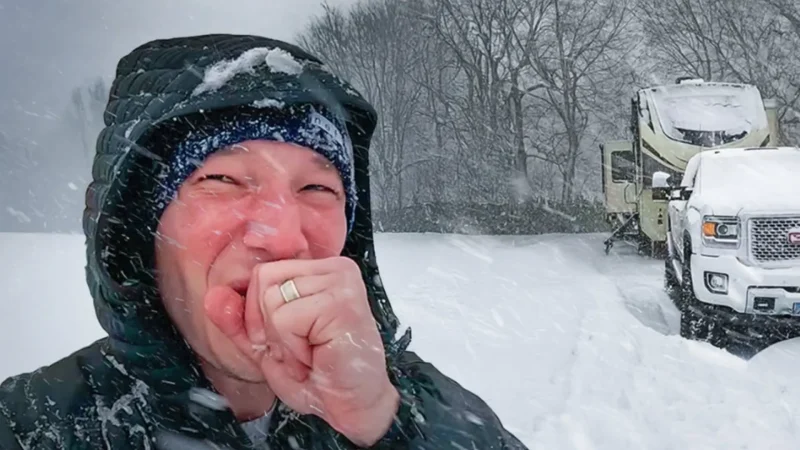
Winter RVing brings its own set of challenges, and HappilyEverHanks battles a frozen RV in their latest escapade. Facing temperatures as low as -8°C (17°F), they found themselves fighting against black ice, frozen gear, and a relentless cold snap that turned their travel day into an endurance test.
A Frozen Start
The morning started with a major concern—black ice. They knew they needed to get moving, but their surroundings were completely frozen solid. Everything on the ground was like a rock, and their truck had been struggling with rough starts in the mornings due to the extreme cold.
For the first time, they decided to plug in the truck, hoping to take some strain off the battery and starter. In temperatures this cold, even a well-maintained vehicle can struggle. Pro tip: You don’t have to plug in your truck all night—just 2-3 hours before departure is enough to warm it up properly.
HOT TIP
Be sure to read The Solution to Your Always Cold RV Bathroom if you’re running into this issue consistently. Freeze no more with our tips and tricks!
Icy Obstacles Everywhere
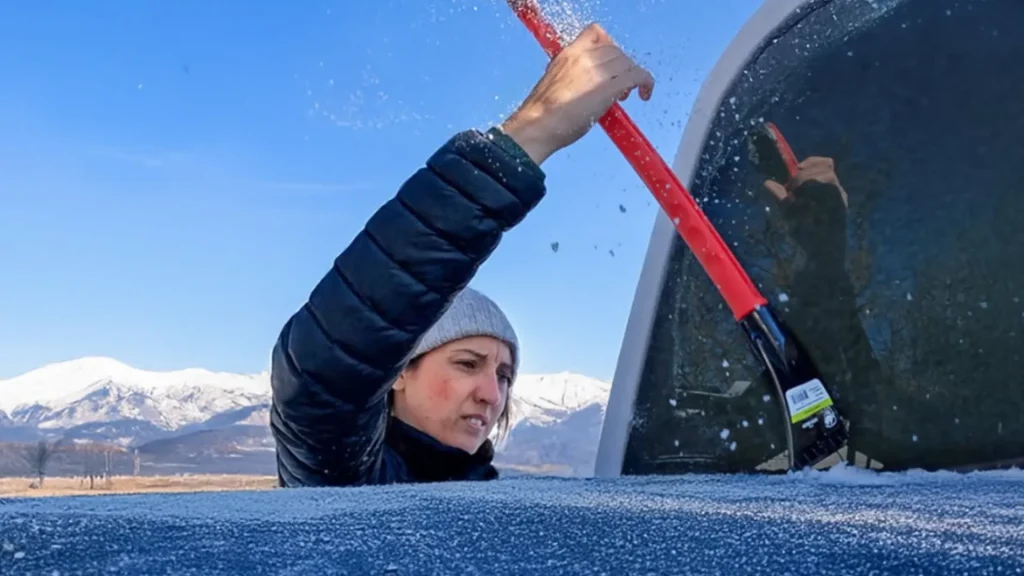
The RV itself was encased in ice. The slide-outs had residual ice build-up, and removing it was crucial to avoid water leaks once they started traveling. The mistake? Not sweeping off the snow the night before. Now, they had thick, frozen layers to contend with.
They used a broom to clear the snow, but it was tough going. A little warm water helped melt the ice, but patience was key—trying to sweep it off immediately didn’t work. Instead, letting the water sit for a few minutes softened the ice enough to remove it.
Packing Up in the Cold
Getting everything packed up was no easy feat. Gloves froze, knees got soaked, and shoes were drenched. Beach towels became an impromptu tool for drying off surfaces. Meanwhile, dealing with frozen sewer connections proved to be another frustration.
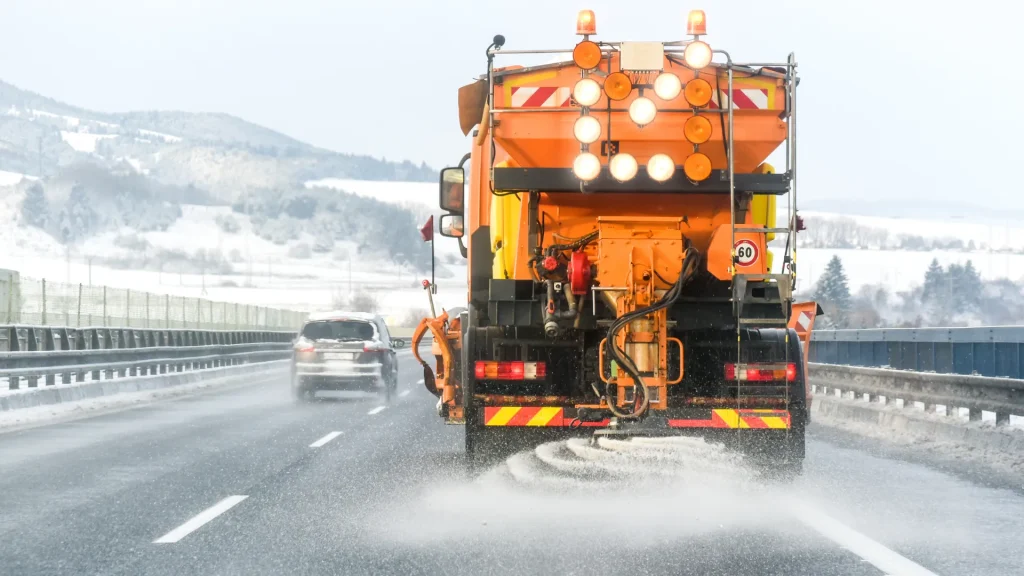
HappilyEverHanks’ battle in a frozen RV was beginning to take its toll on them. Salt trucks were out on the roads, a sign of both good and bad news. While they help prevent ice buildup, salt accelerates rust, something every RVer wants to avoid.
Mechanical Challenges in the Cold
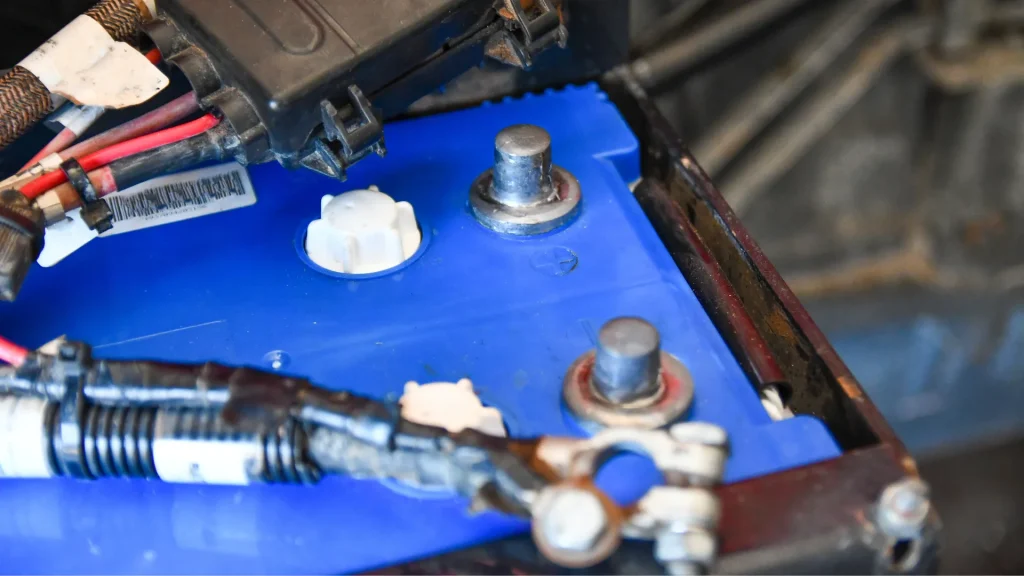
The truck had been sounding rough during cold starts, even displaying a “trailer brake system” error at times. A likely culprit? Low voltage. In freezing temperatures, batteries struggle, and a weakened battery can create glitches in the system.
To reset it, they recommended two options:
- Let the truck sit for 15-30 minutes.
- Disconnect the negative battery terminal for 10 minutes to force a reset.
Meanwhile, tire pressures were also dropping due to the cold, which aligns with Gay-Lussac’s Law—colder temperatures cause lower pressure. They planned to top off their tires before hitting the road.
The Long Drive Begins
Once everything was packed and secured, they hit the road, navigating snowy highways and unpredictable city traffic. Driving through Kansas, they faced a classic winter-driving challenge: sudden slowdowns. One moment, they were cruising at 65 mph, and the next, they were slamming the brakes to avoid stopped traffic.
They stopped for fuel and added a diesel additive to prevent the fuel from gelling in the cold. Then, a much-needed break for both them and their dog, Dexter, before continuing their journey.
Unexpected Surprises
After driving for nearly two hours, they made a hilarious discovery—their broom was still on the roof of the RV! Somehow, it had managed to stay put through the entire ride. It was one of those moments where you just shake your head and laugh.
Finding an RV Park for the Night
After hours of battling the cold, exhaustion was setting in. They finally arrived at an RV park, opting for a back-in full hookup site at $49 per night. By this point, the temperature had climbed to a “balmy” 52°F, which felt like a heatwave compared to the morning’s deep freeze.
Luckily, the park had decent amenities, including strong cell service, a luxury after a long, draining day on the road.
Wrapping Up the Day
Dinner was kept simple—just heating meatloaf on paper plates. No extra effort is required. After an exhausting day of dealing with the cold, frozen gear, and road challenges, all they wanted was a warm meal and some rest.

Key Takeaways for Winter RVing
Their biggest takeaway? Preparation is key. If you’re RVing in freezing temperatures:
- Clear off your roof & slides the night before travel to prevent ice buildup.
- Plug in your truck 2-3 hours before leaving to help with cold starts.
- Keep an eye on tire pressure and adjust it accordingly.
- Use soft tools for snow removal to avoid damaging your RV.
- Travel during the warmest part of the day to avoid icy roads.
Winter RVing is tough, but with the right mindset and preparation, it’s manageable—and even an adventure.
If you enjoyed following along with us as we recounted HappilyEverHanks’ battle in a frozen RV, be sure to check out HappilyEverHanks on YouTube for more wild RV stories and winter survival tips!
If You Want the Latest Travel News, Join Our Mailing List
Don’t rely on biased RV industry news sources to keep you informed. Stick with Nomadic News. We publish articles and breaking stories that matter to you every weekday.