



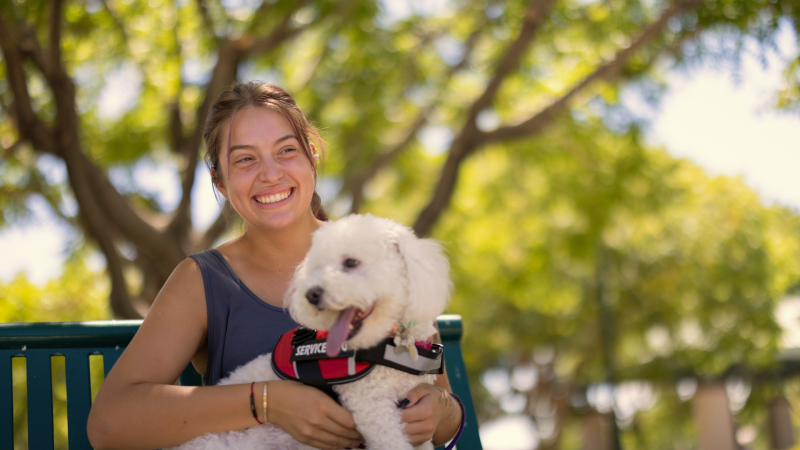
If you go out into public, there’s a good chance you’ve encountered someone abusing service animal policies.
Service animals can be a fantastic resource to those who need them. Unfortunately, a few bad apples are ruining it for the rest.
Today, we’re sharing the unfortunate realities of these situations and what you can do about them.
HOT TIP
Check out Your Off-Leash Dogs are Ruining Boondocking for information on how poor dog handling is affecting those around you.
What Are Service Animals?
Service animals are animals that have gone through specific training to assist individuals with disabilities. They can perform specific tasks that humans may have difficulty or be unable to complete on their own.
Despite what many think, these animals are not pets. They’re working animals, and their primary job is supporting humans. You’ll commonly see them guiding visually impaired individuals and alerting individuals with hearing issues. However, some can complete tasks like retrieving items and opening doors.
Additionally, service animals can often get trained to assist individuals with health conditions. Those with extreme cases of diabetes, epilepsy, or post-traumatic stress disorder (PTSD) may benefit from a service animal.

Fake Service Animals Are Creating Issues for Legit Users
Unfortunately, the rules and regulations for service animals can be very confusing and challenging to understand. As a result, some people have found ways to abuse the system. This typically results in people pretending an animal is a service animal when it isn’t.
They typically do this to gain access to public spaces, accommodations, and transportation with their pet. Sadly, this type of abuse of the system creates problems for those who have an actual need. Additionally, these pets’ lack of proper training can increase public safety risks.
When these people abuse the system, it causes a negative perception and skepticism of service animals. Many with legitimate needs can run into issues at businesses and establishments because people are skeptical. Luckily, officials take violations of these policies very seriously.
How to Identify a Fake Service Animal
Unfortunately, identifying a fake service animal can be very challenging. However, there are some common ways you can quickly identify many of them.
Lack of Training Vest
One of the most obvious ways to identify a fake service animal is that it’s missing a training vest. Typically, those with an actual service animal follow the rules and regulations, which require service animals to wear a training vest. If you spot someone without a vest alerting you that the animal is a service animal, there’s a good chance it’s just a pet.
However, you must be aware that some tricksters go the extra mile and purchase vests for their fake service animals. Since these are readily available online, it leads to increased skepticism amongst the public. As a result, you’ll need a bit more evidence to support your case.

Showing Signs of Aggression
An obvious sign that a service animal is fake is if it displays signs of aggression in public. Legitimate service animals go through intense training. Because the animals’ jobs put humans at risk, they must pass the training with an almost perfect score.
Part of their training is to remain calm and composed during any situation. A service animal that growls, lunges, or snaps at others likely hasn’t received this training. Just like any other aggressive animal, fake service animals can be a threat to the public.
Non-Responsive to Handler’s Commands
Like the signs of aggression, service animals undergo extreme training to respond to their handler. An animal with proper training will follow their owner’s commands in most situations without question. Because the bond between the service animal and its owner is very strong, an animal ignoring their handler’s commands is likely a fake.

How to Handle an Encounter with a Fake Service Animal
Because of the rules and regulations around service animals, how you handle an encounter with an alleged fake is critical. If not managed appropriately, you could end up in serious legal trouble, which is what some imposters want.
Observe the Situation
You must observe and assess the situation if you suspect someone has a fake service animal. Take notes or capture inappropriate actions and behavior on camera. These pictures or videos can be helpful later if you find yourself in a legal situation.
Make sure that the owner is in control of the service animal at all times. Additionally, as we mentioned, a legitimate animal will wear the proper vest. Take note of anything you witness that appears unusual for how service animals and their owners typically interact.
Know the Laws
When dealing with fake service animals, you must know the laws and regulations governing service animals. Unfortunately, these can vary based on the location. As a result, you must familiarize yourself with those specific to where you live.
By knowing the laws, you can understand the rights and responsibilities of owners. This will help you stay on the right side of the law and ensure those with legitimate needs get the assistance they deserve.
Ask Legitimate Questions
If you need to confront the owner of the suspected fake service animal, do so respectfully. Even if you’re positive that the animal is a fake, treating the person disrespectfully will only escalate the situation.
Start by acknowledging the service animal and what you’ve witnessed. While some questions regarding the individual’s health are privacy violations, you can ask what functions the animal is trained to perform related to the handler’s disability. An individual with a legitimate need will have no problem articulating these tasks.
If you’re a customer in an establishment, it’s typically best to let a business owner or manager handle the situation. However, sometimes, you’ll need to contact the authorities if you’re in a public space. Since an individual willing to use a fake service animal may not respond kindly to the situation, it’s good to involve someone with authority.
When contacting them, share all the information and behaviors you’ve noticed. Make sure you share any videos or photos that you may have to help officers with their investigation.

Bogus Service Animals Ruin It for Those Who Need Them
We hate that those who use bogus service animals are ruining it for others. Those with legitimate needs face enough challenges; dealing with imposters piles onto them. If you spot someone with a fake service animal, say something. Get a manager or the authorities involved so they can address the situation quickly and appropriately.
If You Want the Latest Travel News, Join Our Mailing List
Don’t rely on biased RV industry news sources to keep you informed. Stick with Nomadic News. We publish articles and breaking stories that matter to you every weekday.